Walk into almost any convenience store or stand beside a vending machine in Japan and you will find bottled green tea ready to drink. It is cheap, cold, convenient, and part of everyday life. For many people in Japan, especially younger generations, brewing tea in a teapot is no longer something they do every day.
But bottled tea and freshly brewed tea are not quite the same experience. Think of the difference between bottled iced tea and tea brewed from loose leaves in a favorite teapot. A kyusu brings that same distinction to Japanese green tea.
A kyusu (急須) is a Japanese teapot traditionally used for brewing loose-leaf tea, especially sencha. Its compact body, built-in strainer, and distinctive handle are not simply decorative features. They make it easy to let the leaves open, control the pour, and serve even small amounts of tea without leaving too much liquid behind.
For someone discovering Japanese tea outside Japan, a kyusu is also one of the easiest traditional tools to bring into ordinary life. You do not need a formal tea ceremony or a special tea room. A pot, a cup, good leaves, hot water, and a few quiet minutes are enough.
Quick answer: A kyusu (急須) is a small Japanese teapot with a side handle and a built-in strainer, made for brewing loose-leaf green tea like sencha. If you drink Japanese green tea regularly, the easiest first choice is a 250–300 ml yokode (side-handled) kyusu with a fine mesh filter.
- What Is a Kyusu?
- Why Use a Kyusu?
- Kyusu and Yunomi: Why They Work So Well Together
- Famous Japanese Pottery Styles to Know
- Types of Kyusu: Which Shape Should You Choose?
- Choosing a Kyusu Filter
- How to Choose Your First Kyusu
- A Simple Way to Brew Sencha in a Kyusu
- How to Care for a Kyusu
- Kyusu vs. a Regular Teapot: Do You Really Need One?
- Frequently Asked Questions
- Bring a Japanese Tea Ritual Into Everyday Life
What Is a Kyusu?
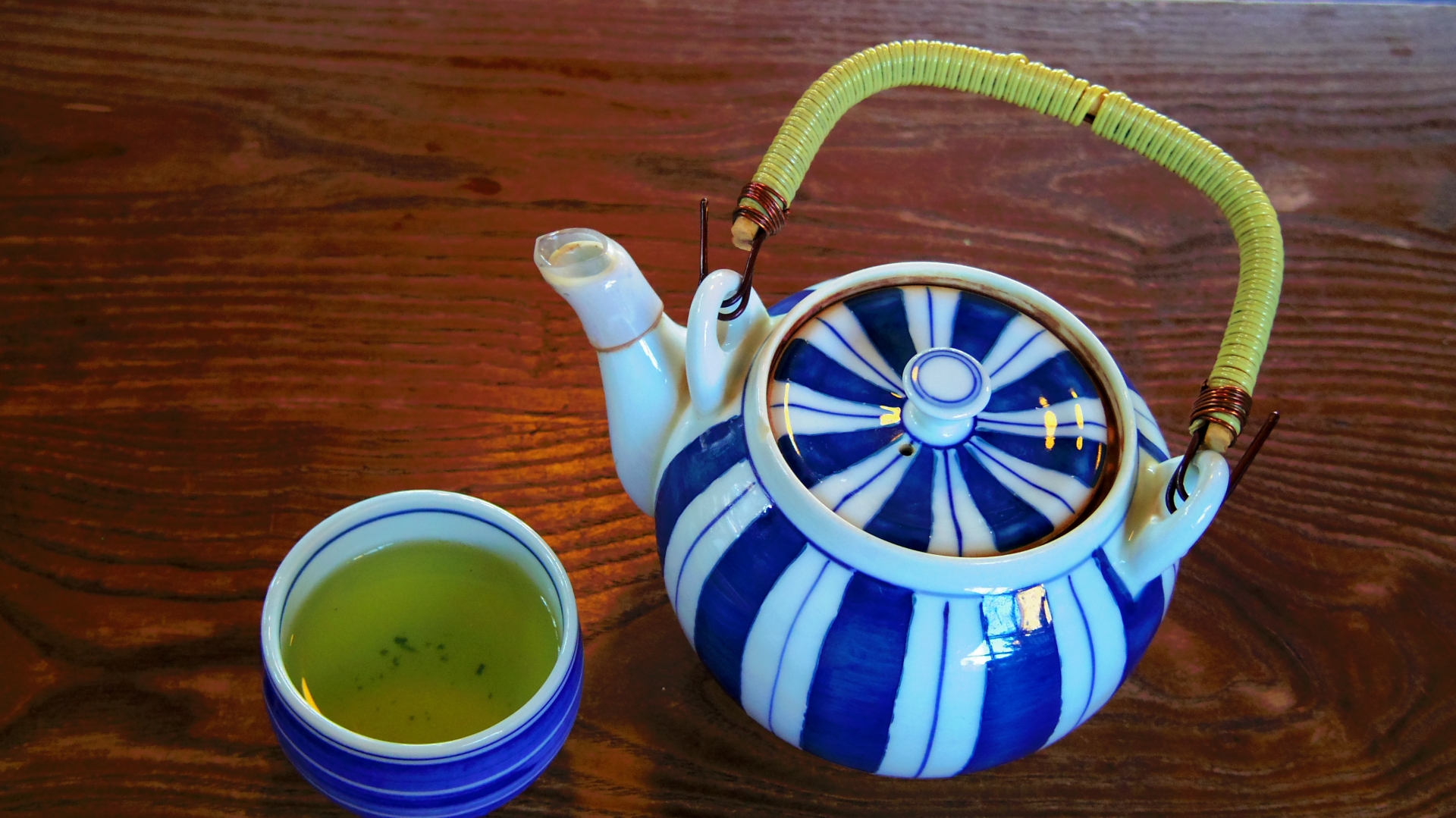
The word kyusu simply means teapot in Japanese, but in English it usually refers to the small Japanese teapots used for green tea. The most recognizable version has a handle extending from the side of the pot at roughly a right angle to the spout. This style is called yokode kyusu.
Kyusu are commonly made from ceramic or porcelain and are produced throughout Japan. They range from rustic, unglazed clay pots to clean white porcelain designs that look at home in a modern kitchen.
Although you can brew Japanese tea in a Western teapot, French press, or glass pot, a kyusu is particularly convenient for the small servings and repeated short infusions often used with Japanese green tea.
Why Use a Kyusu?
A good kyusu is a simple example of functional Japanese design: several small details work together to make brewing loose-leaf green tea easier.
The side handle makes pouring easy
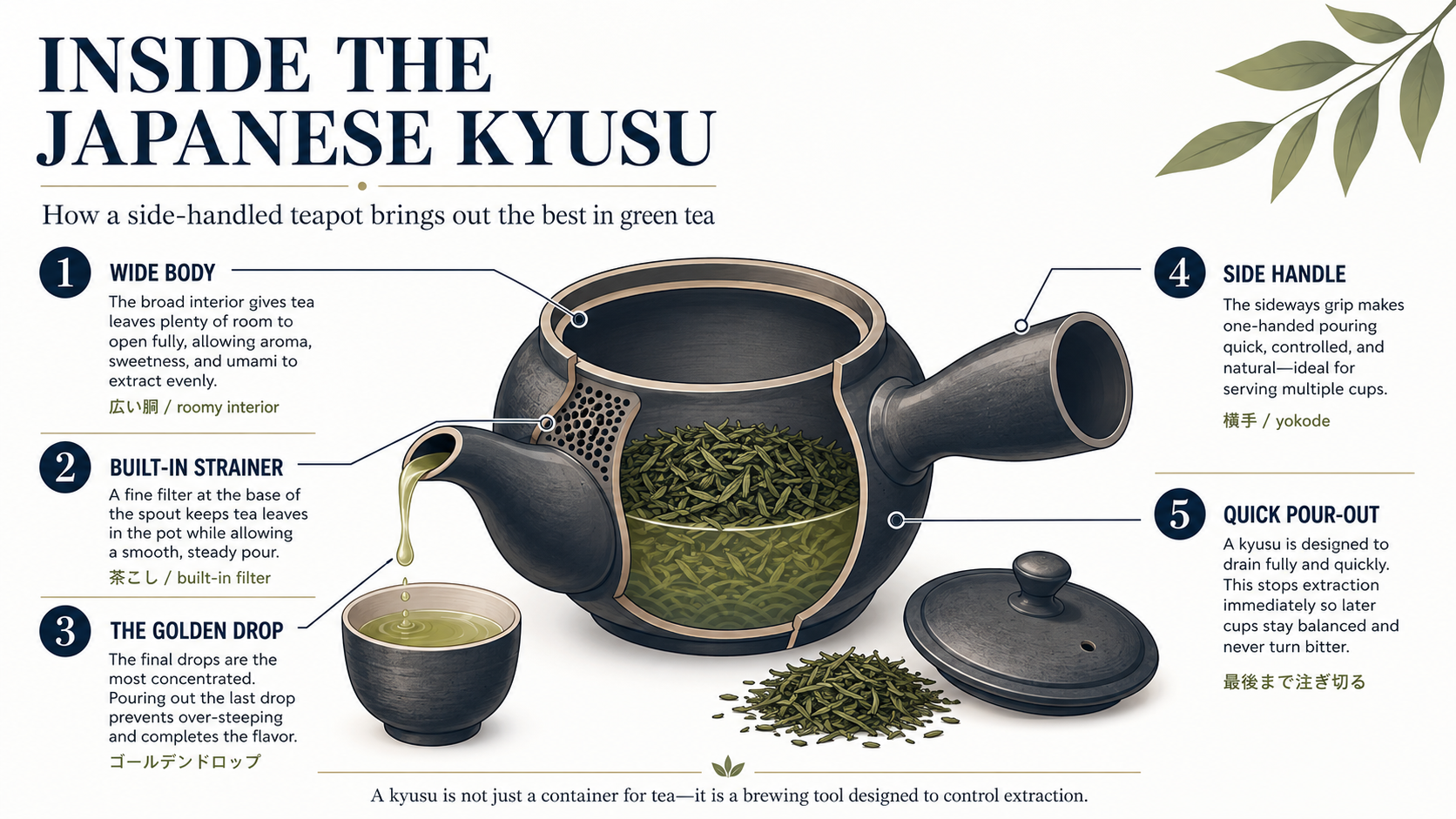
On a yokode kyusu, the handle sits on the side rather than behind the pot. You can lift and tilt the teapot with a small rotation of the wrist, while a finger or thumb helps keep the lid secure. This is particularly comfortable when pouring several small cups in succession.
The leaves have room to open
Japanese green tea is usually brewed loose rather than sealed inside a tea bag. Inside the pot, the leaves can move and expand as they meet the water. A kyusu with enough interior space allows the leaves to circulate rather than being compressed into a tiny infuser.
The strainer is built into the pot
Most kyusu include a strainer near the spout, so the leaves remain in the pot while the tea flows into the cup. Depending on the teapot, the filter may be ceramic or metal.
It is designed to pour the tea out completely
When brewing Japanese green tea, it is useful to empty the pot after each infusion instead of leaving the leaves sitting in hot water. A well-designed kyusu pours cleanly and makes it easier to serve the last drops. In Japanese tea culture, you may hear the final drop described as the most precious or flavorful drop of the pot.
Kyusu and Yunomi: Why They Work So Well Together
A kyusu is only half of the familiar Japanese tea-table pairing. The other half is the yunomi (湯呑み): a small, usually handleless cup used for everyday tea.
The cup can help you manage water temperature
Many Japanese green teas are brewed with water cooler than a full boil. For everyday sencha, a common starting range is around 70–80°C (158–176°F), although the ideal temperature depends on the tea.
One simple method is to pour hot water into the yunomi first and then transfer it to the kyusu. The cup warms up while the water cools slightly. It is a practical technique that requires no special equipment.
A handleless cup changes the experience
Unlike a large mug, a yunomi is normally held around the body of the cup. The warmth is easy to feel through the ceramic, and the smaller size suits the relatively small servings typical of Japanese green tea.
The color of the tea becomes part of the table
Yunomi with pale or white interiors make it easy to see the color of the brewed tea, from clear yellow-green sencha to deeper green teas. For many people, choosing cups and teapots that look good together is part of the pleasure of building a Japanese tea set.
Famous Japanese Pottery Styles to Know
You do not need to buy a famous regional ware to enjoy Japanese tea. Still, pottery origin is useful to understand when shopping because different regions have developed recognizable materials, forms, and aesthetics.
These names describe pottery traditions rather than a single design. Two kyusu from the same region can look completely different, so treat the region as one clue rather than the only factor in choosing a pot.
| Style | What to expect | Good choice for |
|---|---|---|
| Tokoname Ware | One of Japan’s best-known traditions for kyusu. Often associated with reddish or earthy clay, refined forms, and dedicated tea ware. | A traditional Japanese kyusu and serious everyday tea brewing. |
| Banko Ware | Known for subdued earth tones and a rustic, understated appearance. Tea ware is an important part of the tradition. | People who prefer darker, earthy ceramics and traditional tableware. |
| Hasami Ware | Porcelain with many clean, practical, contemporary designs. Often easy to combine with modern Western tableware. | Modern kitchens, casual everyday use, and minimalist interiors. |
| Arita Ware | A historic porcelain tradition known for white porcelain and a wide range of decorative styles. | Gifts, coordinated tea sets, and more decorative table settings. |
| Mino Ware | An extremely broad family of ceramics with many shapes, glazes, styles, and price points. | First-time buyers who want plenty of affordable choices. |
Types of Kyusu: Which Shape Should You Choose?
Yokode — side-handled
This is the classic shape most people picture when they hear the word kyusu. The handle projects from the side of the pot, making it easy to pour with one hand. For a first Japanese teapot, yokode is the most traditional and versatile choice.
Uwade — top-handled
An uwade kyusu has a handle that arches over the top of the pot. Larger examples work well when serving several people, and the shape is also commonly seen with teas such as bancha and hojicha.
Ushirode — back-handled
This style places the handle opposite the spout, much like a Western teapot. It feels immediately familiar to people accustomed to European-style tea ware and is easy to use with either hand.
Choosing a Kyusu Filter
The filter matters almost as much as the shape of the pot, particularly if you drink teas with small or broken leaves.
Metal mesh
A fine metal mesh catches small leaf particles and generally provides a fast, easy pour. It is especially practical for fukamushi sencha, whose deeply steamed leaves tend to break into smaller pieces.
Ceramic filter
Small holes are formed directly in a ceramic filter inside the pot. This keeps the construction simple and avoids a large metal mesh inside the teapot. Because the holes are usually larger than fine metal mesh, very small leaf particles may pass through.
Removable basket strainer
A removable basket is convenient to empty and wash. Check its size before buying: if the basket is too small for the pot, the leaves may have less room to expand. A wide basket that gives the leaves space is preferable.
How to Choose Your First Kyusu
If you are buying a kyusu for the first time, you do not need the most expensive handmade pot. Focus on four practical details: capacity, filter, handle, and how easy the pot will be to clean.
Choose the right capacity
| Capacity | Best for | Notes |
|---|---|---|
| 100–150 ml | One person, gyokuro, small concentrated servings | Compact and specialized; may feel small for everyday use. |
| 250–300 ml | One to three people | The easiest all-round size for a first kyusu. |
| 400 ml or more | Families, guests, office tea | Useful for larger servings; check that the pot remains comfortable to pour. |
Check the lid and pour
A lid that sits securely and a spout that pours without excessive dripping make a noticeable difference in daily use. If you can handle the teapot in person, test how naturally the handle sits in your hand.
Match the filter to the tea you actually drink
For standard sencha, many filter styles work well. If you regularly drink fukamushi sencha, a fine and generously sized mesh filter is usually the easiest option.
Buy for your routine, not only for display
Handmade pottery can be beautiful, but the best first kyusu is one you will actually use. A simple, durable pot that pours well and cleans easily is often a better everyday purchase than a delicate piece you are afraid to touch.
A Simple Way to Brew Sencha in a Kyusu
- Measure the tea. Start with about 4–6 g of sencha for roughly 200 ml of water, then adjust to your taste.
- Cool the water. For everyday sencha, around 70–80°C (158–176°F) is a useful starting point. Pouring hot water into the yunomi first is an easy way to cool it slightly.
- Add the leaves to the kyusu. Place the loose leaves directly into the pot.
- Add the water and steep. A starting point of about 60 seconds works for many sencha, but follow the producer’s instructions when available.
- Pour completely. If serving several cups, pour a little into each cup in turn so the strength is distributed evenly. Empty the kyusu rather than leaving the leaves submerged.
- Brew the leaves again. Good Japanese green tea can usually be infused more than once. Later infusions are often shorter because the leaves are already open.
How to Care for a Kyusu
Kyusu are simple to maintain, but tea leaves can collect around the filter and spout. A few basic habits keep the pot clean and ready for the next brew.
- Remove the used leaves soon after brewing.
- Rinse the interior thoroughly with clean water, paying attention to the filter and spout.
- For unglazed clay kyusu, routine cleaning is generally best kept simple: rinse well rather than regularly washing the interior with strongly scented detergent.
- Leave the lid off and allow the pot to dry completely before storing it.
- If leaves become trapped in the filter, rinse them out gently rather than scraping the filter with a hard object.
Kyusu vs. a Regular Teapot: Do You Really Need One?
No. You can make Japanese green tea without a kyusu. If you already own a small teapot with a good strainer and enough room for loose leaves, it can make perfectly enjoyable tea.
What a kyusu offers is convenience tailored to the way Japanese green tea is commonly brewed: relatively small quantities, loose leaves, short infusions, repeated brewing, and a complete pour between infusions.
If Japanese green tea is something you drink only occasionally, your existing teapot may be enough. If sencha is becoming part of your daily routine, a kyusu is one of the few pieces of specialized tea equipment that genuinely earns its space in the kitchen.
Frequently Asked Questions
Is a kyusu only for green tea?
No. You can use one for many loose-leaf teas. In Japan, however, kyusu are particularly associated with everyday Japanese teas such as sencha, bancha, and hojicha.
Can I use boiling water in a kyusu?
The teapot itself may tolerate hot water depending on its material and construction, but many Japanese green teas taste better when brewed below boiling. Follow the instructions for both your tea and your teapot.
What size kyusu is best for beginners?
Around 250–300 ml is a practical starting point for most people. It works well for one generous serving or several smaller Japanese-style cups.
Do I need a yunomi too?
No, but a yunomi pairs naturally with a kyusu. You can use it to cool water before brewing, and its smaller size suits the serving style of Japanese green tea.
Is Tokoname the best type of kyusu?
Tokoname is one of the best-known Japanese kyusu traditions, but there is no single best region. Filter design, capacity, pouring comfort, durability, and your own taste matter more than the name alone.
Can left-handed people use a side-handled kyusu?
Some yokode kyusu are designed primarily for right-handed pouring. Left-handed and ambidextrous models exist, and a back-handled ushirode pot is another easy option.
Bring a Japanese Tea Ritual Into Everyday Life
A kyusu is not an object that needs to be saved for special occasions. In Japan, tea ware has long belonged to ordinary tables as well as more formal settings.
That everyday usefulness is what makes the kyusu worth discovering. It gives loose Japanese tea room to brew, makes small servings easy to pour, and turns a few minutes of waiting into a quiet break between one part of the day and the next.
Choose a size that suits the number of people you usually serve, a filter that works with the tea you drink, and a design you will be happy to leave within reach. Pair it with a favorite yunomi, open a bag of sencha, and use it.
The best Japanese tools are often the ones that become ordinary through use. A good kyusu is exactly that kind of tool.
Written for The Japan Toolbook — researched to help readers outside Japan choose and use a kyusu with confidence.
コメント